
Technical information
Engineering the shape, thickness and properties of aluminium.
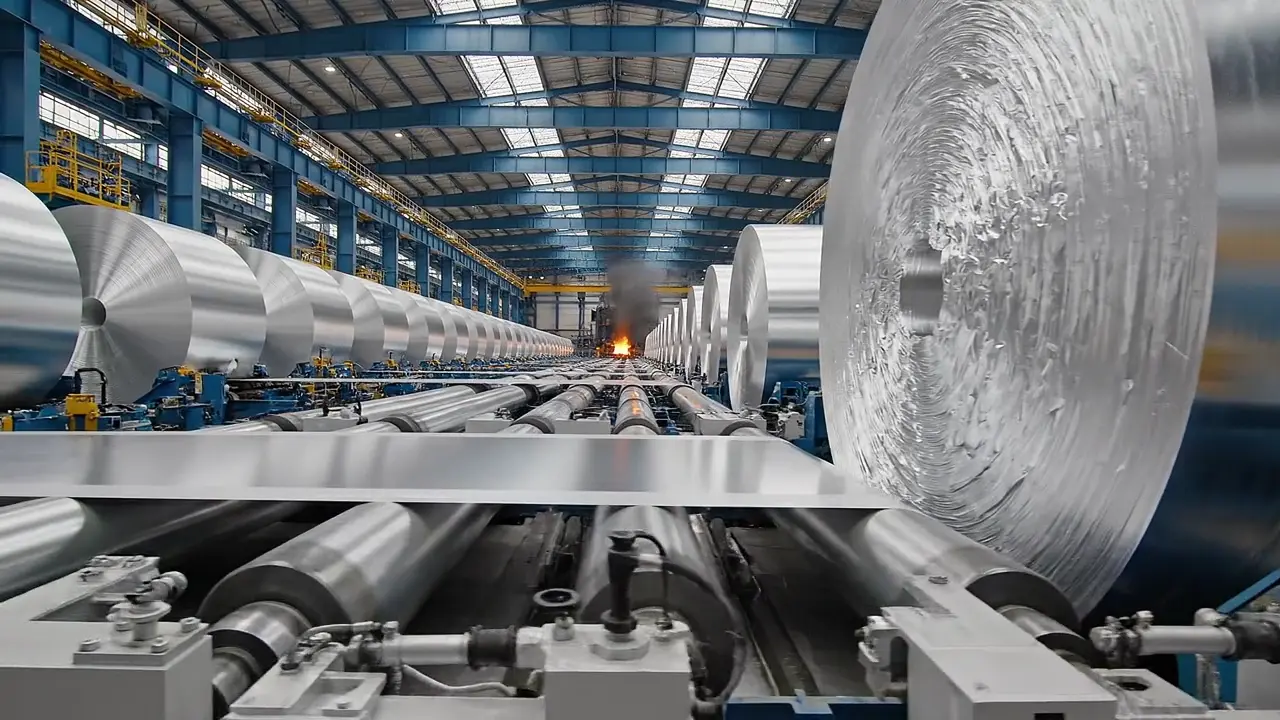
Rolling converts cast feedstock into flat products through successive reductions in thickness. Depending on the product, hot rolling, cold rolling and heat treatment are combined to obtain the required dimensions and condition. Extrusion takes a different route, pushing prepared billet through a die to create a defined cross-section.
Both routes connect metallurgical preparation with precision manufacturing. The specification may include thickness, width, profile geometry, surface finish and mechanical condition. Tooling, process control and inspection must be selected for the application. Commvensa’s development perspective considers these transformation capabilities as a bridge between primary metal and higher-value industrial demand.
Mechanical transformation converts semi-finished products into thicknesses, sections, and use conditions. Rolling and extrusion are different routes: one primarily produces flat formats and the other profiles defined by a die.
- Input material
- Aluminum slabs or billets
- Industrial output
- Flat rolled products and extruded profiles
Transformation sequence
- 01
Semi-finished Product Preparation
The material is identified and conditioned for the chosen route. In rolling, the slab is prepared for thickness reduction; in extrusion, the billet is assigned to a die and a work sequence. The initial condition influences the result.
- 02
Rolling or Extrusion
Rolling mills progressively reduce thickness using rollers. Extrusion shapes the metal by passing it through a die. Scheduling considers geometry, alloy behavior, and installed equipment capabilities.
- 03
Treatment and Finishing
According to specification, the route may incorporate heat treatment, stretching, leveling, cutting, or coiling. Inspection confirms dimensional and surface condition before moving to fabrication, packaging, or delivery as a semi-finished product.
Equipment and systems
- Rolling mills and coiling equipment
- Extrusion presses and dies
- Furnaces and heat treatment systems
- Leveling, cutting, and inspection lines
Process control and quality
Control monitors thickness, width, geometry, surface, and customer-required properties. Verifications relate to the alloy and metallurgical state; visual appearance does not replace technical inspection.
Operational continuity
Rollers, dies, drives, and lubrication or cooling circuits require specific maintenance. Scheduling tool changes and campaigns allows coordinating productivity, availability, and product variety.
Connection to the next stage
Coils, sheets, and profiles go to fabrication or are supplied as transformed products according to order.
Process focus
- Hot and cold rolling
- Extrusion & profile geometry
- Surface and dimensional inspection
Output & applications
- Sheet and coil
- Extruded profiles
- Semi-finished industrial products
The process shown explains the industrial value chain. The scope of each Commvensa engagement depends on the relevant project, contract and operating arrangements.
Process reference: The Aluminum Association ↗