
Technical information
Electrolytic reduction turns alumina into liquid aluminium.
Primary aluminium is produced by electrolysis. Alumina is dissolved in a molten electrolyte and an electric current drives the reduction process. The resulting liquid metal is collected and transferred to the cast house. Potlines, electrical systems and carbon anodes form an interconnected production system.
The availability and reliability of electrical power are central to project planning. Technical preparation must also include cell condition, rectifiers, material handling, gas treatment and skilled operating teams. In Commvensa’s development framework, preparation of these systems and the decision to activate production are distinct milestones, tied to verified operating conditions.
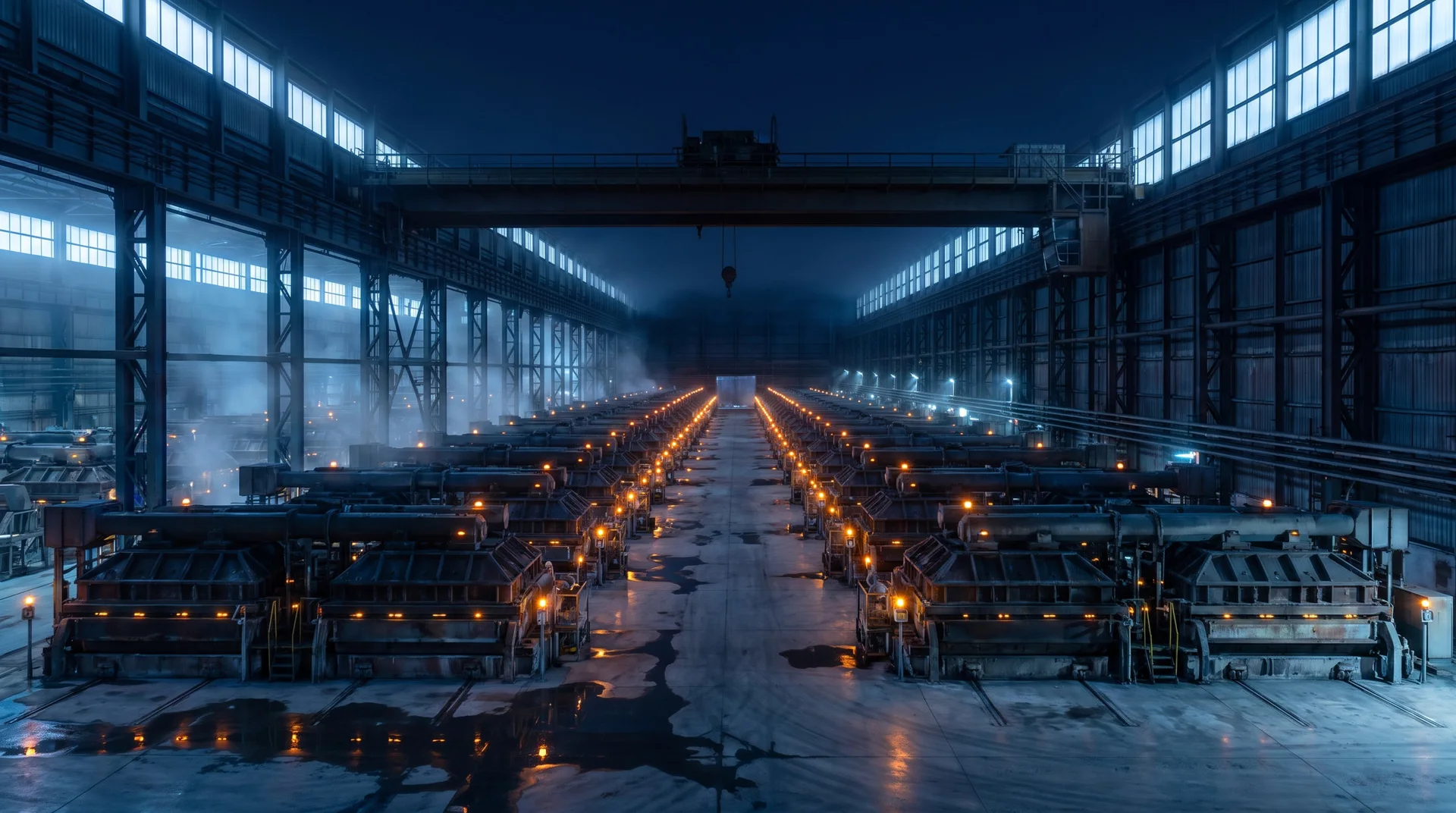
Electrolytic reduction converts alumina into liquid aluminum. The potroom functions as an integrated system where electricity, alumina feed, anodes, metal handling, and gas treatment must maintain continuity.
- Input material
- Alumina, electricity, and electrolysis materials
- Industrial output
- Liquid primary aluminum
Transformation sequence
- 01
Feed Preparation
Alumina is received, stored, and distributed to the cells. Dosing and handling systems must sustain an organized feed. Anodes and other process materials are prepared according to the employed technology's design.
- 02
Reduction in Cells
The electric current enables the electrochemical transformation of alumina dissolved in the bath. Cell control monitors the electrical and thermal behavior of the system. The operation coordinates feed, anode condition, and maintenance of current-conducting elements.
- 03
Metal Tapping and Transfer
Liquid aluminum is tapped from the cells and transferred to the casthouse. Handling of crucibles and transport equipment links the potroom with the casting schedule, while metal identification accompanies its transfer.
Equipment and systems
- Cells, linings, and busbars
- Substations and rectifier systems
- Alumina dosing and anode handling
- Tapping equipment, metal transport, and gas treatment
Process control and quality
Electrical variables, thermal balance, and bath condition are evaluated along with the results of the obtained metal. Control adapts to cell technology; there is no single configuration applicable to all facilities.
Operational continuity
Electrical stability is a central condition. Industrial preparation also includes rectifier spare parts, lining materials, handling equipment, and gas treatment. Line activation requires verifying these systems jointly.
Connection to the next stage
Liquid metal feeds the casthouse, where it is adjusted to the alloys and formats required for subsequent transformation.
Process focus
- Electrolytic cells & rectification
- Carbon anodes & material handling
- Energy and operating readiness
Output & applications
- Liquid primary aluminium
- Metal for casting and alloying
- Feedstock for downstream transformation
The process shown explains the industrial value chain. The scope of each Commvensa engagement depends on the relevant project, contract and operating arrangements.
Process reference: The Aluminum Association ↗