
Technical information
From metallic feed to controlled steel composition and cast forms.
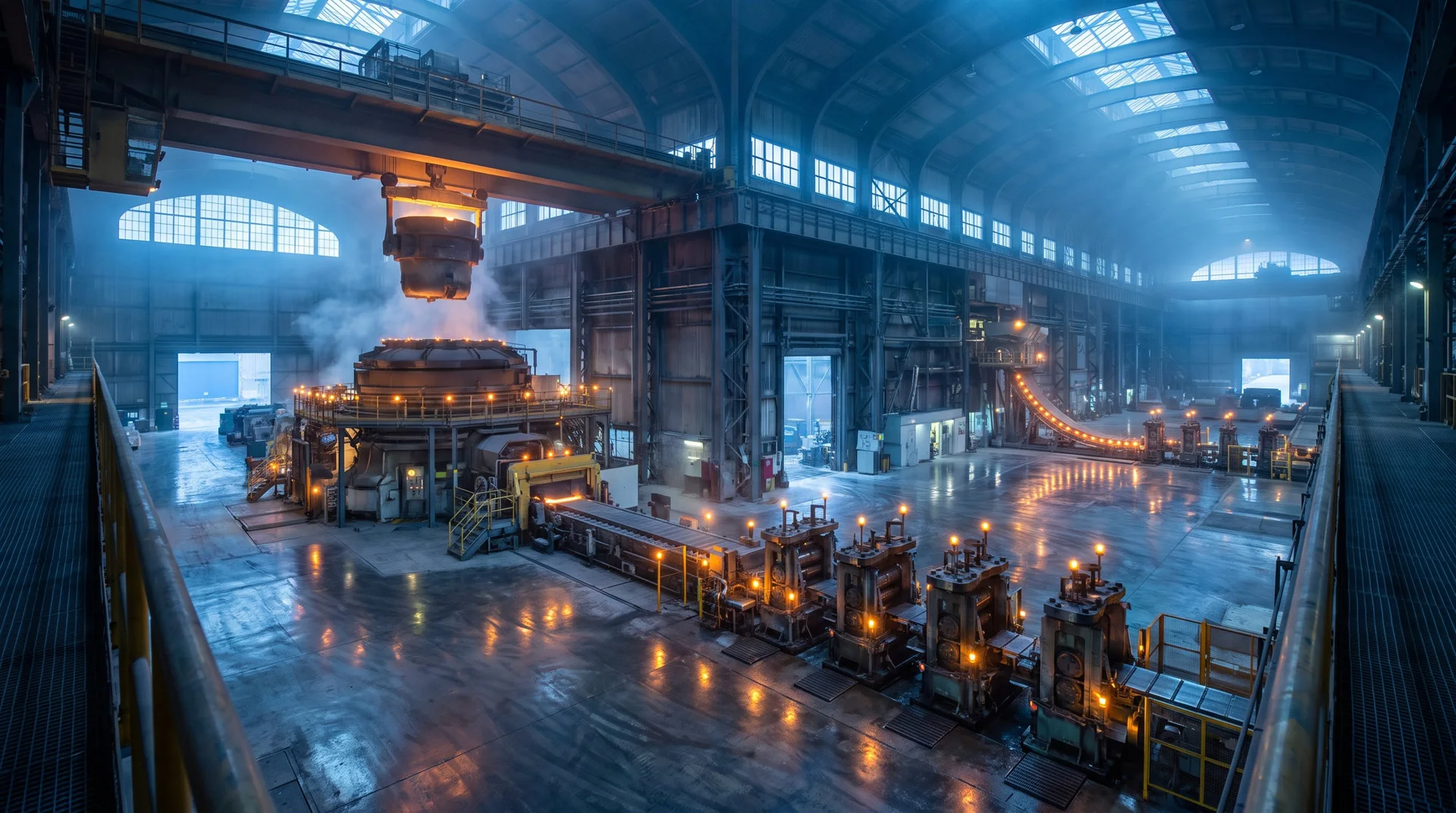
Steelmaking converts metallic inputs into liquid steel with the composition required for its intended use. In an electric arc furnace route, the charge can combine recycled steel with direct reduced iron or other metallic inputs. Refining and temperature control prepare the melt for casting.
Continuous casting then forms the steel into semi-finished shapes such as slabs, blooms or billets. The industrial system extends beyond the furnace: electrical supply, cooling water, gases, refractories, cranes and control systems are all necessary. Project readiness must therefore be assessed across the full installation before commissioning.
Steelmaking adjusts the metal's composition and prepares it to become semi-finished products. The electric furnace route connects metallic charge, melting, refining, and continuous casting with a network of auxiliary services of great operational importance.
- Input material
- Metallic charge, energy, and steelmaking materials
- Industrial output
- Steel semi-finished products identified by heat
Transformation sequence
- 01
Charge preparation and melting
The schedule defines the combination of metallic inputs according to the steel grade and availability. The electric furnace provides energy to form the liquid bath. The organization of charges, consumables, and handling equipment accompanies the production sequence.
- 02
Refining and secondary metallurgy
The metal is prepared to achieve the required composition and condition before casting. Depending on the grade and equipment, adjustments and treatments are performed in the ladle. The laboratory and casting schedule must be coordinated with this phase.
- 03
Continuous casting and cutting
Liquid steel passes from the ladle to the distribution system and the mold. Solidification and extraction produce a continuous section that is cut into semi-finished products. The route determines whether the result is slab, bloom, or billet.
Equipment and systems
- Electric furnace and charging system
- Ladles and secondary metallurgy equipment
- Continuous casting machine and cutting
- Cooling, gases, fume extraction, and cranes
Process control and quality
Release relates composition, thermal condition, and semi-finished product quality to the requested grade. Laboratory results and inspections are recorded by heat to maintain traceability to rolling.
Operational continuity
The availability of power, cooling water, gases, and refractories accompanies that of the furnace. Coordination between steelmaking and casting prevents a restriction in one area from disrupting the entire manufacturing schedule.
Connection to the next stage
Slabs, blooms, or billets are assigned to rolling mills compatible with the shape and quality of the semi-finished product.
Process focus
- Electric arc furnace route
- Refining and melt control
- Continuous casting & auxiliaries
Output & applications
- Steel slabs
- Blooms and billets
- Semi-finished feed for rolling
The process shown explains the industrial value chain. The scope of each Commvensa engagement depends on the relevant project, contract and operating arrangements.
Process reference: World Steel Association ↗