
Technical information
Transforming cast steel into products for construction and manufacturing.
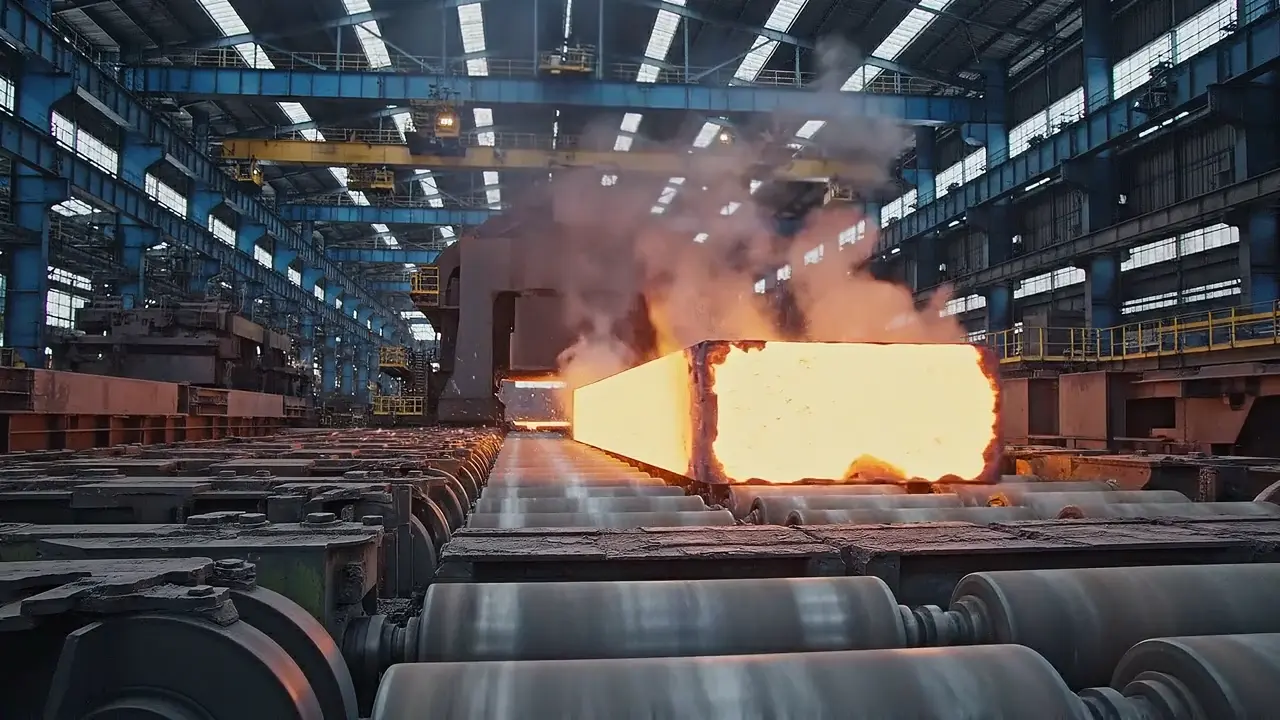
Rolling shapes steel into flat or long products. Slabs are associated with plate, sheet and coil routes, while billets and blooms feed appropriate long-product mills. The production sequence is selected for the product geometry and required properties.
Finishing can include further rolling, treatment, cutting and inspection. Customers define the applicable grade, dimensions, surface and documentation requirements. Commvensa’s industrial development vision includes these downstream capabilities as part of the wider iron and steel chain; the specific product and supply scope is established with the relevant project and commercial partners.
Rolling converts the semi-finished product into a family of flat or long products. The industrial itinerary depends on the requested geometry and properties: thermal preparation, deformation, finishing, and inspection form a defined sequence for each product.
- Input material
- Steel slabs, blooms, or billets
- Industrial output
- Flat or long products for industrial use
Transformation sequence
- 01
Preparation and hot rolling
The semi-finished product is conditioned to enter the mill. Rolling stands reduce and shape its section in successive passes. Scheduling links the input geometry with the equipment and the product family that the facility can manufacture.
- 02
Transformation and finishing
Depending on the route, cold rolling, heat treatments, leveling, cutting, or other operations may be involved. Not all products pass through all units: the sequence is determined by the grade, dimension, and required supply condition.
- 03
Inspection and delivery
Products are verified and organized by order and heat. Dimensional and surface control is complemented by specified tests. Identification, packaging, and storage must maintain this correspondence until dispatch.
Equipment and systems
- Preparation furnaces and rolling mills
- Drives, rolls, and cooling
- Finishing, cutting, and coiling equipment
- Inspection, identification, and product handling
Process control and quality
Conformity is evaluated against grade, dimensions, and use requirements. Records must allow relating the rolled product to the semi-finished product and the originating heat, including applicable tests and treatments.
Operational continuity
Rolls, guides, drives, and finishing equipment require preparation and maintenance linked to campaigns. Scheduling considers format changes, storage capacity, and dispatch availability.
Connection to the next stage
Products serve construction, infrastructure, machinery, and manufacturing. The end-user specification guides grade and route selection throughout the chain.
Process focus
- Hot and cold rolling
- Flat and long product routes
- Finishing, inspection & specification
Output & applications
- Sheet, plate and coil applications
- Long products for infrastructure
- Industrial steel applications
The process shown explains the industrial value chain. The scope of each Commvensa engagement depends on the relevant project, contract and operating arrangements.
Process reference: World Steel Association ↗